



7 min read · Culinary Skills & Techniques
The 3 Knives Every Home Cook Actually Needs
Ditch the kitchen clutter! Discover the three workhorse knives every chef swears by, the secret grip for maximum control, and simple care tips to keep your blades razor-sharp for life.
Before you read on
Something to Chew On — Trivia
Before you read on, let’s test your Food IQ!
Why does chopping onions with a sharp chef's knife make you cry way less than using a dull one?
A) A sharp blade slices cleanly through onion cells, releasing far fewer tear-inducing compounds into the air.
B) The friction of a dull blade heats up the onion, accelerating the release of sulfur gas into the air.
C) Sharp high-carbon stainless steel neutralizes the acid on contact before it can vaporize.
D) A clean cut allows the onion to release moisture faster, trapping the irritating gases on the cutting board.
Scroll to the answer reveal at the end of the article.
If you look next to the stove in almost any home, chances are you’ll see a massive 15-piece knife block sitting on the counter. Most of the time, it’s really just there as a decorative piece for the kitchen counter rather than a practical set of tools.
To be completely honest, I was guilty of this as well. I had this bulky knife set sitting on display for the longest time. A few knives were missing, some were hopelessly dull, and half of them were blades I never even used. Most people rely on just one or two blades, while the rest sit there getting dusty, and the few actually being used struggle to slice cleanly through even a ripe tomato.
In professional kitchens, we don't carry heavy 15-piece blocks. Chefs rely on a sleek roll of high-performing, essential tools.
Streamlining your cutlery set not only clears counter clutter, it saves you time, keeps you safe, and elevates your cooking confidence. Here are the three essential knives every kitchen actually needs, plus the insider secrets to maintaining them.
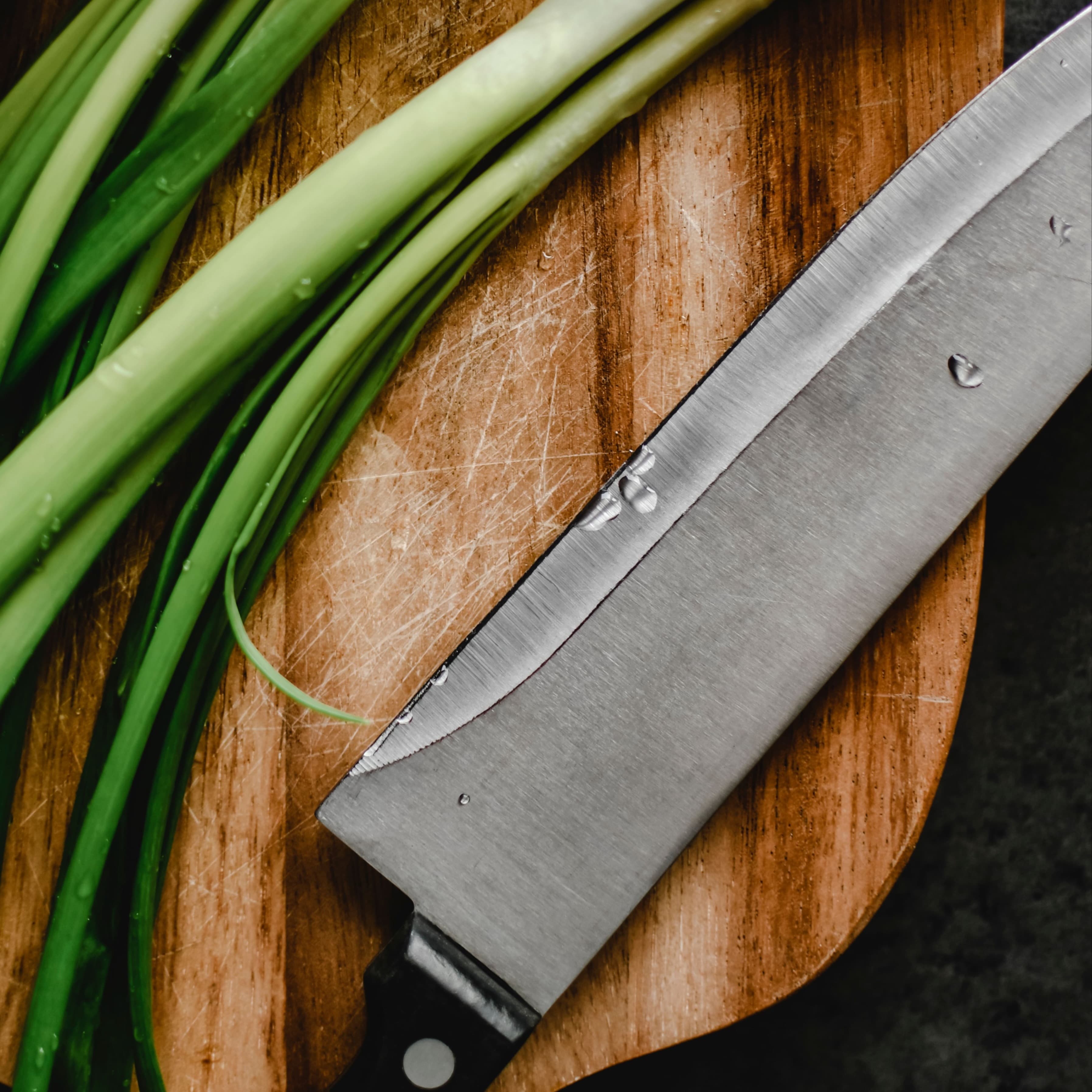
1. The Workhorse: An 8-Inch Chef’s Knife
If you could only own one knife for the rest of your life, this is it. The Chef’s Knife is designed to handle about 90% of your daily kitchen tasks, from dicing onions and mincing garlic to chopping hearty winter squash and carving chicken.
What to look for: An 8-inch blade provides the perfect balance of length and control for most hand sizes. Look for a knife with a comfortable weight and a subtle curve along the blade, which allows for a smooth, rocking motion on your cutting board.
Chef’s Pro-Tip: Hold the knife using the "Pinch Grip." Instead of wrapping your whole hand around the handle like a hammer, pinch the spine of the blade right where it meets the handle using your thumb and index finger. This simple shift gives you ultimate control and prevents hand fatigue!
2. The Detail Artist: A 3.5-Inch Paring Knife
Answer reveal
Trivia Answer: A — Did you guess correctly?
It’s all about cell damage! When a dull knife hacks through an onion, it crushes and bursts the plant's cell walls, spraying an enzyme mixture into the air that turns into syn-propanethial-S-oxide, the gas that triggers your tear ducts. A razor-sharp knife glides cleanly between and through the cells without crushing them, keeping the tear-inducing compounds on the cutting board instead of in your eyes!