



5 min read · Chef Inspiration
The Chef’s Guide to Herbs: How to Layer Flavors & Elevate Everyday Meals
Learn when to add woody and tender herbs, how to layer their flavors, and how to turn leftover herbs into a vibrant, waste-reducing herb oil.
Before you read on
Something to Chew On — Trivia
Before you read on, let’s test your Food IQ!
You’re finishing a delicate summer pasta dish and want to add fresh basil. Which common preparation method actually causes delicate herbs like basil and mint to bruise, oxidize, and turn dark brown on your cutting board within minutes?
A) Tearing the leaves by hand instead of cutting
B) Dull knife blades or a saw-like dragging motion across the leaves
C) Chiffonading the leaves while they are slightly damp
D) Storing the cut herbs in cold water before garnishing
Scroll to the answer reveal at the end of the article.
Introduction
Have you ever cooked a dish that tasted… fine, but felt like it was missing that vibrant depth you get at a great restaurant?
For years, many home cooks have treated fresh herbs like a last-minute garnish—something pretty to sprinkle over a plate right before serving. But in professional kitchens, chefs don’t just use herbs as a photo-worthy topping. We use them as flavor-building blocks at every stage of the cooking process.
Learning how to properly layer herbs will transform your home cooking from flat to unforgettable. Here is how to master the art of herb layering, build incredible flavor profiles, and turn basic meals into restaurant-quality dishes.
1. The Core Technique: Hard vs. Soft Herbs
The golden rule of flavor layering comes down to understanding the physical structure of the herb. Herbs generally fall into two main categories, and knowing when to add them to the pan changes everything.
Woody & Hard Herbs (The Infusers)
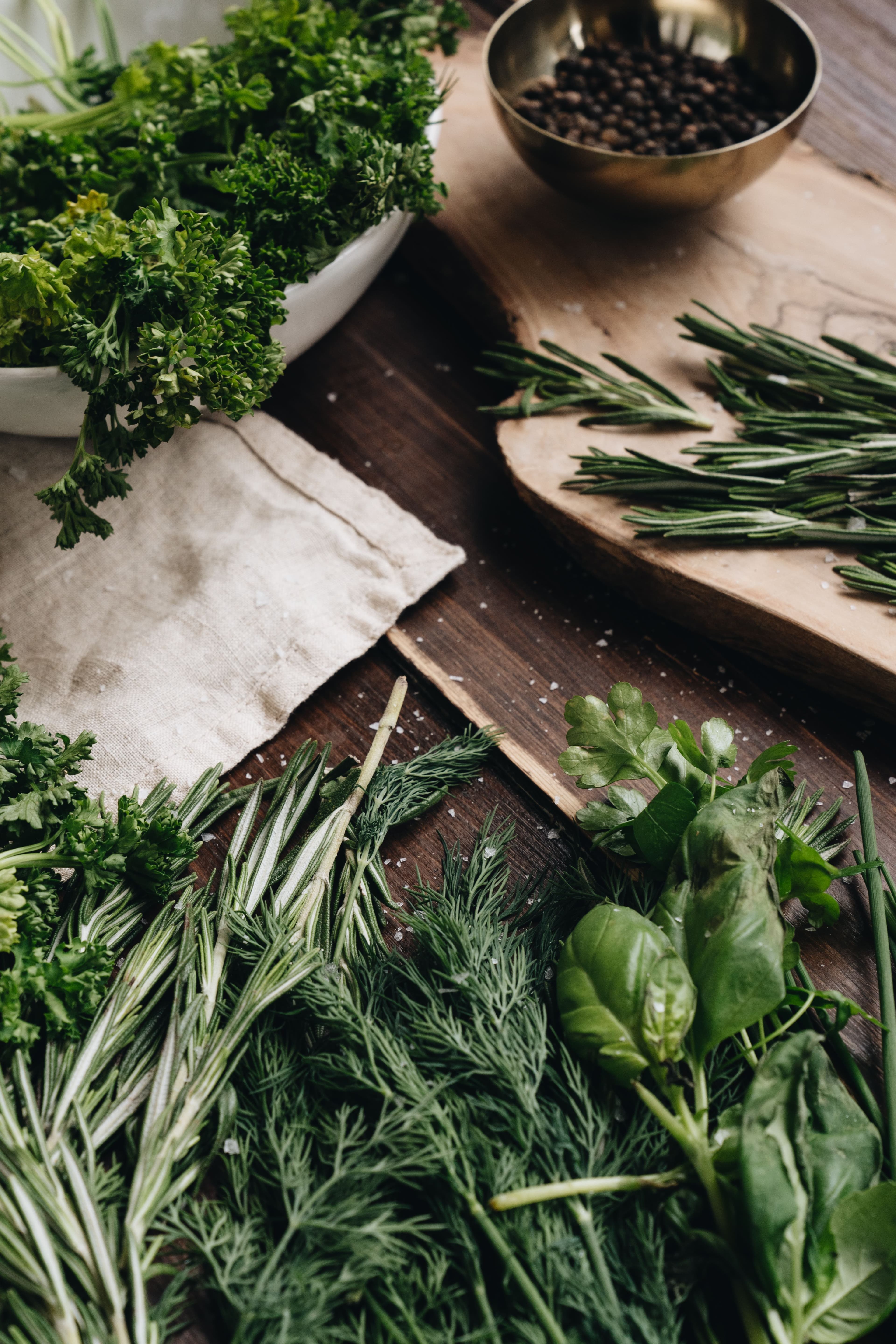
The Herbs: Thyme, Rosemary, Sage, Oregano, Bay Leaves, Winter Savory.
The Technique: These herbs have sturdy, pine-like leaves that can withstand high temperatures and long cooking times. Their essential oils are trapped deep within tough plant tissue, requiring heat and time to release.
When to Add: Early in the process. Sear them in oil or butter at the start of a dish, or let them simmer in soups, braises, and roasts to create a rich, foundational base note.
Tender & Soft Herbs (The Finishers)
The Herbs: Basil, Cilantro, Flat-Leaf Parsley, Mint, Dill, Chives, Tarragon.
The Technique: Soft herbs contain delicate essential oils that evaporate quickly when exposed to high, prolonged heat. If you cook them too long, their bright flavor vanishes and turns bitter.
When to Add: At the very end. Stir them in during the last 30 seconds of cooking, or scatter them fresh over the top just before serving to provide a clean, aromatic top note.
2. The Complete Herb Profile & Flavor Matrix
Woody & Hard Herbs (Add Early)
Swipe sideways to see all columns.
Herb | Flavor Profile | Best Culinary Role |
|---|---|---|
Thyme | Earthy, subtle mint and lemon undertones | A universal workhorse. Infuses deep savory richness into pan juices, roasted roots, and braises. |
Rosemary | Piney, resinous, woodsy, and bold | Extremely potent. Excellent for high-heat roasting, infused fats, and hearty meats. |
Sage | Savory, peppery, with warm, eucalyptus notes | Loves rich, buttery dishes, poultry, brown butter sauces, and autumnal root veggies. |
Oregano | Robust, pungent, slightly bitter, and peppery | Core flavor in Mediterranean and Latin dishes; thrives in tomato sauces and marinades. |
Bay Leaves | Subtle floral, herbal, and tea-like aroma | Slow-release flavor enhancer. Must be simmered in stews, stocks, braises, and grains. |
Winter Savory | Peppery, piney, and intensely savory | Stronger than summer savory; ideal for heavy bean dishes, lentil soups, and gamey meats. |
Tender & Soft Herbs (Add Late / Finishing)
Swipe sideways to see all columns.
Herb | Flavor Profile | Best Culinary Role |
|---|---|---|
Basil | Sweet, pepper-forward, subtle clove notes | Pairs effortlessly with tomatoes, garlic, and summer produce. Best added raw or as a warm finish. |
Cilantro | Citrusy, pungent, sharp, and clean | Cuts through rich, fatty, or spicy foods like a charm. Always use raw as a finishing burst. |
Flat-Leaf Parsley | Grassy, slightly bitter, fresh, and bright | The ultimate balancing act. Acts as a natural palate cleanser to cut through heavy cream or butter. |
Mint | Cooling, sweet, sharp, and aromatic | Cuts heaviness in roasted meats such as lamb, and elevates grain salads, cool yogurt dips, and fruit dressings. |
Dill | Feathery, anise-like, citrusy, and tangy | Perfect partner for fish, pickles, potato salads, acidic dressings, and sour cream bases. |
Chives | Mild onion, delicate garlic sweetness | Provides a subtle onion aroma without the harsh bite of raw onions. Ideal garnish for eggs, potatoes, and soups. |
Tarragon | Distinct licorice/anise, bittersweet, elegant | Classic French herb; shines in poultry dishes, cream sauces, egg preparations, and vinaigrettes. |
3. Chef’s Secret Technique: The Blanched Herb Oil
Want to turn leftover soft herbs into an absolute flavor powerhouse that reduces kitchen waste? Make a blanched herb oil.
When you blend raw basil or parsley into oil, it turns brown after a few hours because of oxidation. Chefs solve this with a quick 5-second blanch:
Dunk: Plunge your herbs into boiling water for 5 seconds.
Shock: Immediately transfer them to an ice bath to lock in their vibrant green chlorophyll.
Squeeze & Blend: Squeeze out every drop of excess water with a towel, then blend on high speed with extra virgin olive oil.
Strain: Pass it through a fine-mesh strainer or coffee filter.
You’re left with a stunning, emerald-green herb oil that lasts for weeks in the fridge—perfect for drizzling over grilled vegetables, soups, or roasted proteins!
The Takeaway
Great cooking isn’t about accumulating dozens of obscure ingredients; it’s about knowing how to coax the maximum potential out of a few fresh ones. By layering sturdy herbs at the beginning of your cook and crowning your dishes with delicate herbs at the end, you’ll instantly unlock deeper, brighter, and more balanced flavors in your daily cooking.
Answer reveal
Trivia Answer: B — Did you guess correctly?
Dull knife blades! When you slice herbs with a dull knife—or drag the blade back and forth in a saw-like motion—you crush the plant cells instead of cleanly severing them. This releases internal enzymes, causing them to react with oxygen and turn black or dark brown on the cutting board.
Chef’s Pro Tip: Always use your sharpest chef’s knife. Roll soft leaves like basil tightly for a chiffonade, then make one clean, single-pass slice through the herbs.